
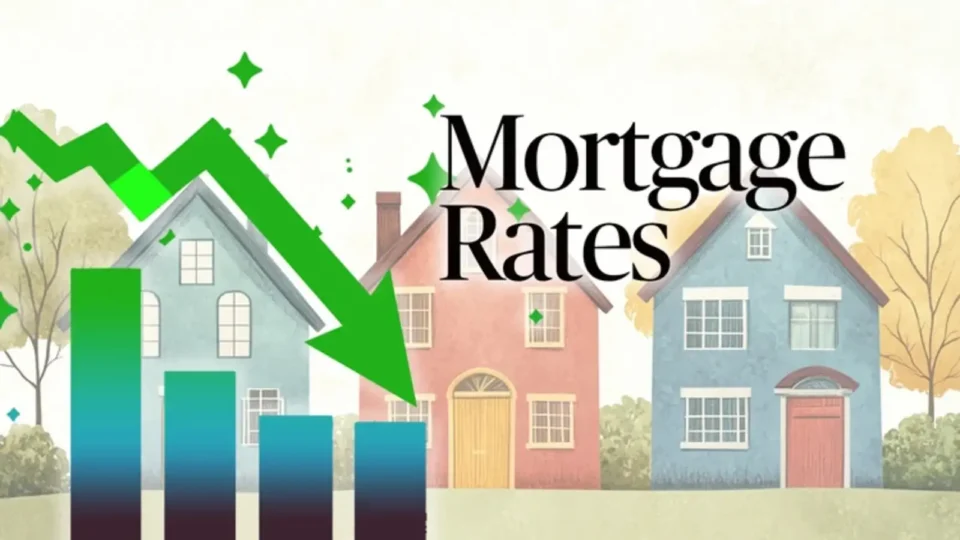
After an aggressive hiking cycle, the question of are mortgage rates dropping is on every homebuyer’s mind. As of March 2026, rates have eased from their 7.8% peak to a range of 5.75%–6.20%. While there is downward momentum, experts suggest a significant “step lower” is unlikely without further Federal Reserve intervention. Most economists predict rates will hover around 6% for the remainder of the year as the housing market enters a balanced, but still expensive, spring season.
Mortgage rates have shown some signs of moderation from their 2023 peaks but remain significantly elevated compared to 2020-2021 levels. Whether they drop meaningfully depends primarily on Federal Reserve policy, inflation progress, and broader economic conditions.
Where Rates Are Now (2024 Context)
| Loan Type | Rate Range (2024) | Comparison: 2021 |
|---|---|---|
| 30-year fixed | ~6.5-7.5% | ~2.75-3.25% |
| 15-year fixed | ~6.0-7.0% | ~2.25-2.75% |
| 5/1 ARM | ~6.0-6.5% | ~2.5-3.0% |
| FHA 30-year | ~6.5-7.5% | ~3.0-3.5% |
| Jumbo 30-year | ~6.5-7.5% | ~3.0-3.5% |
*Rates fluctuate daily; check current rates at Freddie Mac (freddiemac.com) for weekly survey averages.*
What Controls Mortgage Rates (It’s Not Just the Fed)
This is one of the most misunderstood aspects of mortgage rates. The Federal Reserve directly controls the federal funds rate – the overnight rate banks charge each other. Mortgage rates are not the federal funds rate. They’re much more closely correlated with 10-year Treasury yields.
The chain:
- Fed raises/lowers federal funds rate
- Bond market adjusts Treasury yields based on rate expectations
- 10-year Treasury yield is the primary mortgage rate benchmark
- Mortgage rates = approximately 10-year Treasury + 1.5-2.0% spread
When traders anticipate Fed rate cuts, 10-year yields can fall before the Fed actually cuts – which is why mortgage rates sometimes drop before official Fed action.
The Rate Drop Forecast
| Scenario | Timeline | Rate Outcome |
|---|---|---|
| Fed cuts 2-3 times (base case) | 2024-2025 | 30-yr mortgage: 6.0-6.5% |
| Fed cuts aggressively (recession scenario) | 2024-2025 | 30-yr mortgage: 5.5-6.0% |
| Fed holds or hikes (inflation resurgence) | 2024-2025 | 30-yr mortgage: 7.0-8.0% |
| Return to 3% (optimistic scenario) | 5+ years away | Requires fundamental shift in inflation and economic conditions |
Most mortgage economists do not expect a return to the 3% rates of 2020-2021 within any near-term timeframe. Those rates were the result of emergency-level Federal Reserve intervention during COVID – not a “normal” rate environment.
What This Means for Buyers and Owners
For Prospective Buyers
The “wait for rates to drop” calculation requires comparing:
- Months of rent paid while waiting
- Risk that rates don’t drop or home prices increase while waiting
- Potential to refinance when rates eventually fall (“marry the house, date the rate”)
Refinancing becomes economically attractive when rates drop approximately 0.75-1.0% below your current rate (accounting for closing costs). Someone buying at 7% today can refinance if rates reach 6.0-6.25%.
For Current Homeowners
Most homeowners locked in rates at 2.75-3.5% (2020-2022). This has created the “lock-in effect” – selling means giving up an extremely low rate to take on a much higher one. This is suppressing housing supply and keeping home prices elevated despite reduced affordability.
The Rate-Price Relationship
Lower rates don’t necessarily mean buying gets cheaper:
- Lower rates → more buyers enter the market → more competition → prices rise
- Many housing economists expect home price appreciation to partially offset any rate relief
- The affordability calculation is: payment = price × rate. Both variables matter.
How to Track Mortgage Rate Movement
| Source | What It Shows |
|---|---|
| Freddie Mac Weekly Survey | Most cited benchmark, published every Thursday |
| Mortgage News Daily | Daily rate tracking, most real-time |
| Bankrate | Current lender rates |
| FRED (Federal Reserve) | Historical data |
Bottom Line
Mortgage rates have shown some moderation from their 2023 peaks but remain around 6.5-7.5% – roughly double the pandemic-era lows. Meaningful rate drops require Federal Reserve rate cuts driven by continued inflation progress, which most forecasters expect gradually through 2024-2025. Returning to 3% rates is not a realistic near-term expectation. For buyers facing this market: the “marry the house, date the rate” strategy (buy now, refinance when rates fall) has been the most practical framing – with the important caveat that refinancing requires rates to fall enough to justify the cost.
