
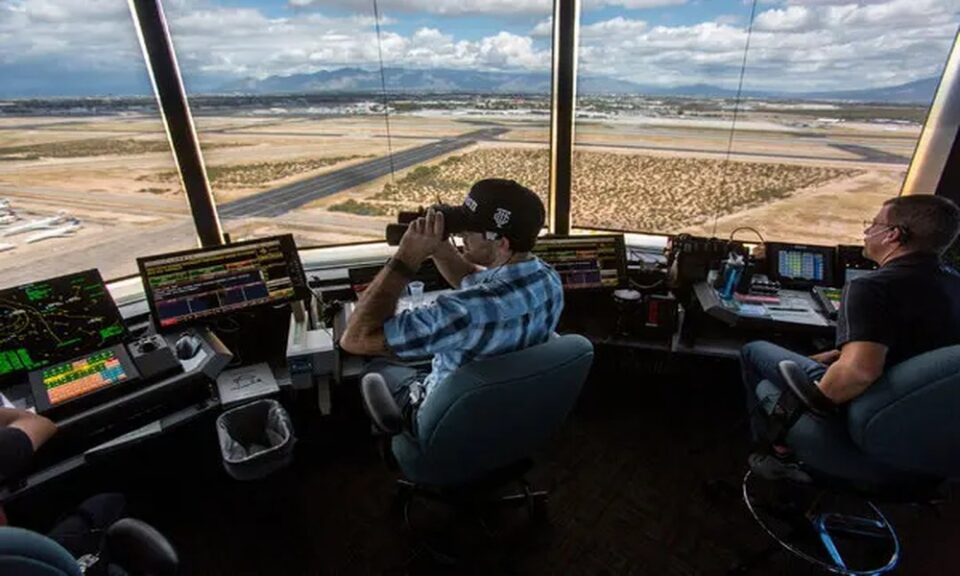
The FAA’s Southwest Region headquarters at 10101 Hillwood Parkway in Fort Worth is one of the largest concentrations of federal aviation personnel in the country. Air traffic controllers, aviation safety inspectors, flight standards specialists, engineers, and program analysts there cover Texas, Oklahoma, Louisiana, Arkansas, and New Mexico. Reporting a safety concern inside that system can be a career-defining act, and federal aviation workers who do report often find themselves on the wrong end of a reassignment, a performance review, or worse within weeks of the disclosure. A Dallas federal employee attorney who has handled FAA whistleblower matters can help an aviation worker understand which protections apply, where to file, and how to build the kind of record that survives the agency’s response.
The Whistleblower Statutes That Cover FAA Employees
Federal aviation workers operate under a layered protection scheme that’s broader than what most other federal employees have access to.
The Whistleblower Protection Act of 1989 and the Whistleblower Protection Enhancement Act of 2012 cover FAA employees the same way they cover other executive branch workers, codified primarily at 5 U.S.C. § 2302(b)(8) and (b)(9). A protected disclosure under the WPA includes reporting a violation of law, gross mismanagement, gross waste of funds, abuse of authority, or a substantial and specific danger to public health or safety. For FAA employees, a substantial and specific danger to public safety is often the precise category at issue.
Layered on top of that is AIR-21, the Wendell H. Ford Aviation Investment and Reform Act for the 21st Century, codified at 49 U.S.C. § 42121. AIR-21 was designed primarily to protect employees of air carriers and their contractors, but it also reaches FAA contractors and certain federal aviation workers in defined situations. AIR-21 complaints run through the Department of Labor’s OSHA Whistleblower Protection Program, with a 90-day filing window from the alleged retaliation.
The FAA Reauthorization Act of 2018 added specific provisions for FAA employees who report safety concerns, including 49 U.S.C. § 40122(g)(3) protections that overlap with the WPA but with FAA-specific procedural overlays.
For air traffic controllers represented by NATCA and other bargaining-unit FAA employees, the collective bargaining agreement also provides protections that interact with the statutory framework.
What Counts as a Protected Disclosure for an Aviation Worker
The WPA’s definition is broad, and the WPEA closed earlier loopholes around disclosures made within an employee’s normal job duties. For FAA workers specifically, common protected disclosures include:
- Reporting that an air traffic facility is operating below mandatory staffing minimums
- Disclosing failures to follow ATC procedures, separation standards, or runway incursion protocols
- Reporting equipment failures that affect safety
- Disclosing falsified inspection records, certification documents, or training records
- Reporting violations of FAR Parts 121, 135, 139, or other regulatory requirements by certificated entities the FAA oversees
- Reporting fatigue-related safety risks tied to scheduling practices
- Disclosing pressure from supervisors to overlook safety findings during inspections
Disclosures made to the agency’s chain of command, the FAA Hotline, the DOT Office of Inspector General, the National Transportation Safety Board (in the course of an investigation), the Office of Special Counsel, or Congress all qualify. Disclosures made publicly through the press are more legally complicated and warrant counsel review before any communication.
Voluntary Safety Reporting Programs and Their Limits
The FAA operates several voluntary safety reporting programs that interact with the whistleblower framework in ways that often surprise employees. The Air Traffic Safety Action Program (ATSAP) for controllers, the Aviation Safety Action Program (ASAP) for the regulated industry, and similar programs provide qualified protections from disciplinary action for employees who self-report errors that meet program criteria.
These programs are useful, but they’re not a substitute for whistleblower statutes. ATSAP and ASAP protections cover certain self-reported errors. They don’t necessarily protect an employee who reports another person’s misconduct, who escalates a systemic safety concern outside the program, or who refuses to participate in conduct the employee believes is unsafe. Relying on a voluntary program when the WPA, AIR-21, or both should be invoked is a common mistake.
How Retaliation Looks in the FAA Context
FAA retaliation rarely comes as an explicit firing the day after a disclosure. The patterns are more often:
- Sudden negative entries in a previously clean performance file
- Loss of a desirable assignment, shift, or detail
- Reassignment to a less prestigious facility or role
- Denial of training or career-development opportunities
- Initiation of medical certification reviews for controllers
- Increased scrutiny of work product compared to peers
- Investigation under the FAA’s own internal disciplinary procedures for conduct that previously went unaddressed
Documenting the timeline of these actions in relation to the protected disclosure is the foundation of an Individual Right of Action case at the MSPB or an AIR-21 complaint at OSHA.
Where to File: OSC, MSPB, OSHA
The forum question is more complicated for FAA employees than for most other federal workers because of the overlapping statutes.
The Office of Special Counsel (OSC) takes WPA complaints. After OSC closes its file or 120 days pass without resolution, the employee can take an Individual Right of Action appeal to the MSPB. For Dallas-region cases, that appeal goes to the MSPB’s Dallas Regional Office.
The MSPB also hears whistleblower retaliation as an affirmative defense in any otherwise appealable adverse action (a removal, suspension over 14 days, demotion). This brings the retaliation claim into the existing 30-day MSPB appeal window.
OSHA handles AIR-21 complaints under 49 U.S.C. § 42121, with a 90-day filing window. AIR-21 cases are investigated by OSHA’s Whistleblower Protection Program and can produce reinstatement, back pay, and other remedies. The procedural posture differs from the OSC/MSPB path, and choosing between them (or pursuing both in parallel where appropriate) requires familiarity with each.
The strongest cases sometimes file with OSC, OSHA, and the agency’s OIG simultaneously, with careful attention to election-of-remedies and overlap issues.
What FAA Employees Should Do Before Disclosing
A few practical considerations:
Document the safety concern in writing before disclosing. Contemporaneous notes that predate any retaliation are worth far more than reconstructions made later.
Use the agency’s formal disclosure channels (FAA Hotline, OIG, OSC) rather than informal supervisor-only reporting where possible, and keep records of what was reported and when.
Avoid using FAA email and FAA systems in ways that could compromise privacy, but also avoid taking documents home in ways that violate IT policy or sensitive security information (SSI) rules. There is a careful path here, and counsel can help define it.
Don’t sign any settlement, last chance agreement, or NDA without counsel review. Recent statutory provisions preserve the right to communicate with OSC, OIG, and Congress regardless of agreement language, but settlement documents still require careful reading.
Federal aviation workers across the FAA Southwest Region (the Fort Worth Center facility, the en route center in Fort Worth, terminal facilities including Dallas-Fort Worth and Dallas Love TRACONs, flight standards offices, and aviation safety inspector field offices) all operate under the same legal framework with agency-specific overlays.
For background, osc.gov, mspb.gov, dol.gov/agencies/whistleblower, and oig.dot.gov publish complaint procedures and decisional resources. The Government Accountability Project at whistleblower.org and the National Whistleblower Center publish plain-English overviews.
Talk to a Dallas Federal Employee Attorney Before the First Disclosure or the First Sign of Retaliation
The procedural choices made in the first few weeks of an FAA whistleblower matter often determine whether the case is preserved or quietly forfeited. A Dallas federal employee attorney who has worked across the FAA Southwest Region, OSC, MSPB Dallas Regional Office, and OSHA’s whistleblower program can help an aviation worker map out the strongest path before any deadline closes. Contact counsel before the disclosure, or at the first sign that the workplace has shifted after a disclosure already made.
